
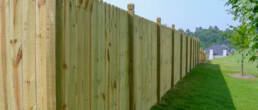
If you live near a busy road, a highway, a school, or simply a noisy neighbor, you’ve probably wondered whether a fence could actually cut down on the noise reaching your yard. Sound barrier fencing is a real solution, but it works differently than most homeowners expect, and not every fence style delivers meaningful noise reduction. Understanding how sound barrier fences actually function helps you set realistic expectations before you invest in one.
This guide covers how sound barrier fences work, what makes a fence effective at blocking noise, and how much of a difference you can realistically expect in a residential setting around metro Atlanta. It also breaks down the situations where a sound barrier fence tends to deliver a real, noticeable improvement versus situations where the benefit is more marginal, so you can decide whether it’s the right investment for your specific property.
How Sound Barrier Fences Actually Work
A sound barrier fence reduces noise primarily through mass, density, and how completely it blocks the line of sight between the noise source and your yard. Sound travels through air as waves, and a solid, heavy barrier interrupts those waves far more effectively than a fence with gaps, slats, or open sections. This is why chain link fencing, even with privacy slats added, does relatively little for noise compared to a solid-panel design, since sound simply passes through the small gaps between slats and the chain link mesh behind them.
The height and length of the barrier matter just as much as the material. A sound barrier fence needs to be tall enough and long enough to fully block the direct path between the noise source and the area you’re trying to protect, since sound can still travel around or over a barrier that’s too short or too narrow. For residential use, this typically means a fence in the six to eight foot range along the property line facing the noise source, built without gaps at the base or between panels. A fence that stops short of covering the full width of the noise source, such as leaving a gap where a driveway or side yard interrupts the barrier line, will allow sound to travel around that opening and reduce the overall effectiveness of the installation.
Weight and thickness of the material play a role too. Thicker boards and denser panel construction absorb and block more sound energy than thin, lightweight materials, which is part of why cost and acoustic performance tend to move together. A budget-friendly, thin-panel fence will provide some benefit over no fence at all, but it won’t perform the same as a heavier, purpose-built option.
What Kind of Noise Reduction Can You Realistically Expect
It’s worth being upfront: no residential fence eliminates noise entirely. A well-designed sound barrier fence can meaningfully reduce perceived noise levels, often described by homeowners as taking the edge off traffic hum or muffling conversations and equipment noise from a neighboring property, but it won’t create silence.
Factors That Affect Real-World Performance
- Distance from the noise source: A barrier closer to the source of the noise is generally more effective than one closer to your house.
- Continuous coverage: Gaps, low sections, or breaks in the fence line reduce effectiveness significantly, even if most of the barrier is solid.
- Material density: Denser materials block more sound than lightweight panels, which is why solid wood or engineered composite barriers tend to outperform thinner materials.
- Ground-level sealing: Sound can travel under a fence with a visible gap at the bottom, so proper installation against the ground matters.
Homeowners who go into a sound barrier fence project with realistic expectations, understanding it as noise reduction rather than noise elimination, tend to be far more satisfied with the results than those expecting complete quiet. It’s also worth understanding that sound perception is subjective. Two homeowners with nearly identical fence installations facing the same road might describe the noise reduction differently based on the type of sound involved, since a fence tends to be more effective against consistent, mid-range noise like traffic hum than against sharp, low-frequency sounds like heavy truck engine braking or occasional loud events.
This is a useful reason to talk through your specific noise source in detail during a consultation rather than assuming every sound barrier fence performs identically. A property backing onto a quiet residential road facing occasional car noise is a very different scenario than one backing directly onto a four-lane highway, and the fence height, material, and design that make sense will differ accordingly.
Which Fence Materials Work Best for Noise Reduction
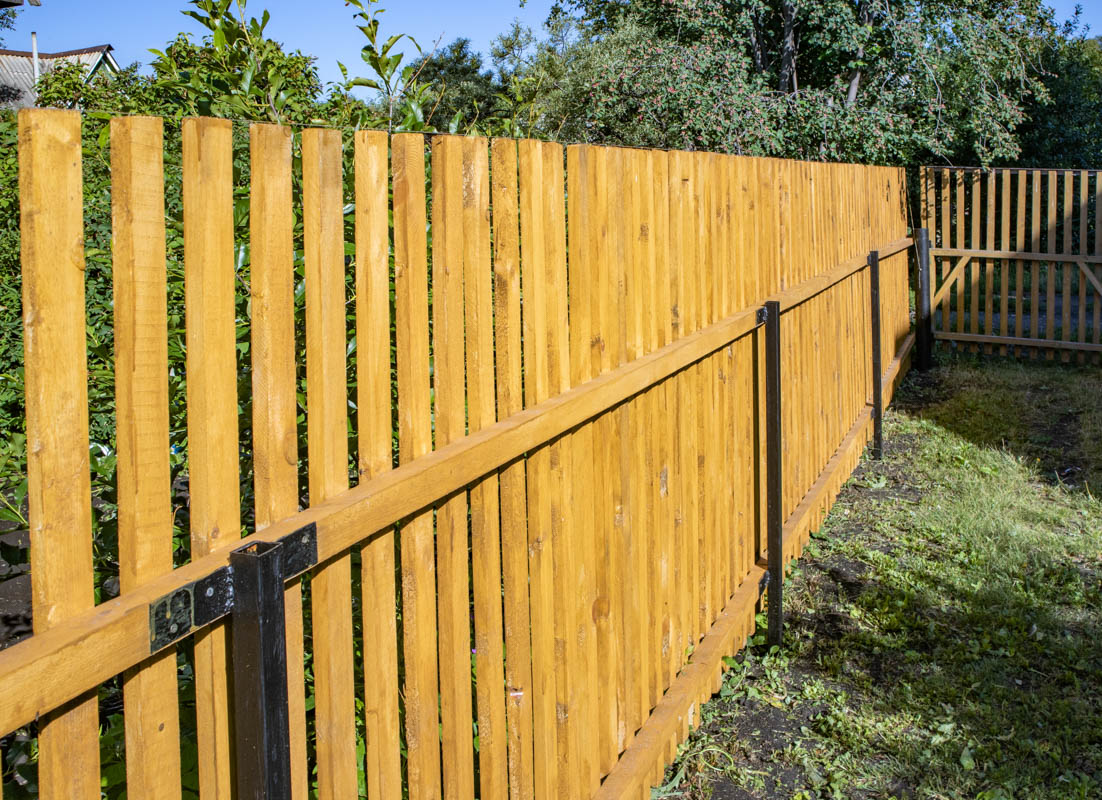
Not every fence style is built for sound dampening, even though most solid-panel fences will help to some degree. Solid wood privacy fencing, built without gaps between boards, is one of the most common and cost-effective choices for residential sound barrier applications. The mass of the wood combined with a tight, continuous panel design gives it decent sound-blocking properties for the price.
Vinyl privacy fencing with solid panels performs similarly to wood in terms of noise reduction, with the added benefit of being lower maintenance over time. For homeowners dealing with particularly persistent noise, such as a property backing directly onto a major road, a taller composite or engineered sound barrier panel system designed specifically for acoustic performance may be worth the higher upfront cost. These specialized panels are more common in commercial and municipal applications but are increasingly available for residential use as well.
Decorative metal and open-style aluminum fencing, while attractive and popular for pool areas and front yards, does very little for sound reduction because of how much open space passes through the design. If reducing noise is a primary goal for your project, it’s worth being clear about that priority early in the planning conversation so the right style gets recommended, rather than choosing a style based on appearance alone and being disappointed by the acoustic result later.
Some homeowners also consider layering strategies, such as pairing a solid fence with dense landscaping like evergreen shrubs or a row of trees along the same property line. While landscaping alone rarely blocks meaningful sound on its own, it can supplement a solid fence and add a visual softening effect that some homeowners prefer over a tall, uninterrupted panel line.
Where Sound Barrier Fencing Makes the Most Sense
Sound barrier fencing tends to deliver the most noticeable benefit in a few common residential situations. Properties backing onto busy roads or highways are probably the most frequent use case we see, where even a moderate reduction in traffic noise makes a real difference in how usable the backyard feels. Homes near schools, sports facilities, or commercial properties with regular equipment noise are another common scenario.
Some homeowners also install sound barrier fencing simply for added privacy from a close neighbor, where the noise reduction is a secondary benefit alongside blocking sightlines. This overlaps significantly with standard privacy fence installations, since a well-built privacy fence often provides a meaningful noise reduction benefit even when that wasn’t the primary goal. Subdivisions with houses built close together, common throughout metro Atlanta, are a good example of where privacy and sound goals tend to line up.
Properties with outdoor living spaces they want to actually use, such as a patio, deck, or pool area situated near a noise source, are another strong case for sound barrier fencing. The investment tends to pay off most clearly when it directly improves how usable and enjoyable an outdoor space feels day to day, rather than being installed purely as a preventative measure without a specific noise problem to solve.
What to Discuss During Your Sound Barrier Fence Consultation
Getting a sound barrier fence right starts with a thorough on-site conversation rather than a generic quote based on linear footage alone. During a consultation, it helps to walk the property together and point out exactly where the noise is coming from, whether that’s a specific stretch of road, a neighboring property line, or a commercial area nearby. This lets the fence line be planned to fully cover the relevant sightline rather than guessing at placement afterward.
Height and Placement Considerations
Property line setbacks, HOA restrictions, and local height ordinances all factor into what’s actually possible on a given lot. Some subdivisions cap residential fence height below what would be ideal for maximum sound blocking, which means the conversation sometimes involves balancing acoustic performance against what the neighborhood or municipality allows.
Budget and Material Trade-Offs
Solid wood privacy fencing tends to be the most budget-friendly starting point for sound reduction, while specialized acoustic panels cost more but perform better for particularly persistent noise sources. Talking through your budget alongside your noise concerns upfront helps us recommend a material and height that actually fits both.
Existing Fencing and Tear-Out
If you already have a fence along the affected property line, whether that’s an older chain link fence or a low picket fence that isn’t doing much for noise, removing and replacing it is usually part of the same project rather than a separate job. This is worth factoring into your overall budget and timeline expectations from the start.
Getting the Right Sound Barrier Fence for Your Property
Before choosing a sound barrier fence, it helps to walk through a short list of considerations:
- Identify exactly where the noise is coming from and confirm the barrier will fully block that line of sight
- Choose a solid, dense material rather than an open-style design if noise reduction is the priority
- Plan for adequate height, generally six feet or taller along the affected property line
- Make sure installation addresses ground-level gaps that let sound pass underneath
- Set realistic expectations for noticeable reduction rather than complete silence
Every property is a little different, and the right approach depends on your specific noise source, yard layout, and budget. Walking the property in person, rather than relying on a generic recommendation, is really the only reliable way to design a barrier that actually addresses your situation.
Our team can walk your property, assess where noise is coming from, and recommend a fence style and height suited to actual noise reduction rather than just appearance. Browse our wood fence and vinyl fence options to see which material fits your goals, or check our FAQ page for more on how we approach residential installations across Marietta and the surrounding metro area. Contact us today to schedule an on-site assessment for your sound barrier fence project.
Thinking about a new fence?
Reading about it is one thing — getting it built right is another. Apex Fence Company has set posts across metro Atlanta and North Georgia for 20+ years, with our own crews on every job and a number that doesn’t move after you sign. Get a free, no-pressure estimate and we’ll come measure your property ourselves.
Like this article? Spread the word!
Related Posts

Apex Fence Company’s Guide to Financing a Fence in Metro Atlanta
Financing a new fence in metro Atlanta? Compare your options, avoid hidden fees, and get…

7 Things to Know Before Installing a Fence in an HOA Community
Planning a fence for your HOA community in metro Atlanta? Here's what to check before you…

5 Fence Styles That Boost Curb Appeal for Metro Atlanta Homes
Discover 5 fence styles that boost curb appeal for Metro Atlanta homes, from wood privacy…